Complete Guide to Types of Drug Test Panels


Did you know that over 70% of US employers require some form of drug testing for their workforce? Drug test panels have become an essential tool in workplaces, healthcare, and legal settings because they help ensure safety and compliance when it matters most. Understanding how these panels work gives you clearer insight into why organizations rely on them to screen for anything from a handful of substances to over a dozen in a single test.
Table of Contents
- Drug Test Panels: Core Concept Explained
- Common Types of Drug Test Panels
- What Each Drug Panel Detects
- Industry Applications and Use Cases
- Accuracy, Limitations, and Legal Compliance
Key Takeaways
| Point | Details |
|---|---|
| Drug Test Panel Overview | Drug test panels are systematic screening methods that detect multiple drugs or metabolites in biological samples, essential for various domains. |
| Common Panel Types | The most utilized panels include the 5-panel and 10-panel tests, suited to different industry needs and substance detection requirements. |
| Industry Applications | Drug panels are crucial in sectors like transportation, healthcare, and legal, ensuring compliance and safety tailored to specific professional needs. |
| Accuracy and Limitations | Customization in drug testing enhances relevance, but considerations like detection sensitivity, false positives, and legal compliance are vital for effective use. |
Drug Test Panels: Core Concept Explained
A drug test panel is a standardized screening method used to detect the presence of multiple drugs or drug metabolites in a biological sample. According to SAMHSA Library, a drug test panel represents a comprehensive “list or menu of drugs or drug classes” that can be systematically examined within a single specimen.
These panels serve critical functions across multiple domains, including workplace safety, healthcare monitoring, legal compliance, and rehabilitation programs. Depending on the specific requirements, drug test panels can be configured to screen for varying numbers of substances. Common panel configurations range from single-drug screenings to extensive multi-drug tests that can detect 10 or more different substances simultaneously.
The core components of a drug test panel typically include:
- Specific drug classes being tested
- Sensitivity thresholds for detection
- Type of biological sample used (urine, blood, hair, saliva)
- Methodology for chemical analysis
As Cleveland Clinic explains, these screenings fundamentally work by detecting drugs or their metabolites in a biological sample. The complexity and breadth of the panel determine its effectiveness in providing comprehensive substance screening results. Learn more about choosing multi-panel drug tests to understand the nuanced selection process for different testing scenarios.
Common Types of Drug Test Panels
Drug test panels are categorized by the number of substances they can detect, with some configurations being more prevalent in specific industries. According to National Drug Screening, the most common drug testing panels are the Department of Transportation (DOT) 5-panel and non-DOT 5 and 10-panel tests.
These panels vary significantly in their complexity and purpose. A 5-panel drug test typically screens for five fundamental drug classes, including marijuana, cocaine, amphetamines, opiates, and phencyclidine (PCP). In contrast, a 10-panel drug test expands the screening to include additional substances like benzodiazepines, barbiturates, methadone, and additional prescription medications.
Professional sectors utilize these panels differently based on their specific needs:
- Workplace Testing: Often uses 5 or 10-panel tests for employee screening
- Transportation Industry: Strictly adheres to DOT-mandated 5-panel screenings
- Healthcare Settings: May use more comprehensive panels to monitor potential prescription drug misuse
- Legal and Rehabilitation Programs: Customize panel selections based on individual requirements
As Mobile Health notes, many organizations now prefer customizable drug testing classes that can be tailored to specific screening needs. Explore our detailed guide on DOT and non-DOT drug panels to understand how different panel configurations might suit your specific testing requirements.
What Each Drug Panel Detects
Drug test panels are designed to screen for specific substances, with the detection range varying based on the panel’s configuration. According to US Drug Test Centers, a standard 5-panel drug test typically screens for five critical substances: marijuana, cocaine, phencyclidine (PCP), amphetamines, and opiates.
As complexity increases, so does the breadth of substance detection.
Healthline highlights that a 10-panel drug test expands the screening to include additional controlled substances beyond the basic 5-panel test. These extended panels provide a more comprehensive view of potential drug use, capturing a wider range of prescription and illicit substances.
Detailed breakdown of common drug panel screenings:
- 5-Panel Test:
- Marijuana (THC)
- Cocaine
- Amphetamines
- Opiates
- Phencyclidine (PCP)
- 10-Panel Test (includes 5-panel substances plus):
- Benzodiazepines
- Barbiturates
- Methadone
- Methaqualone
- Propoxyphene
Different industries and organizations select drug panels based on their specific screening requirements. For instance, transportation and workplace sectors often rely on standardized panel configurations. Learn more about 12-panel drug test detection capabilities to understand the most comprehensive substance screening options available.
Here’s a comparison of common drug test panels and the substances they detect:
| Panel Type | Number of Substances | Drugs Detected |
|---|---|---|
| 4-Panel Test | 4 | Marijuana (THC) Cocaine Amphetamines Opiates |
| 5-Panel Test | 5 | Marijuana (THC) Cocaine Amphetamines Opiates PCP |
| 10-Panel Test | 10 | 5-Panel Drugs Benzodiazepines Barbiturates Methadone Methaqualone Propoxyphene |
| 12-Panel Test | 12 | 10-Panel Drugs Oxycodone Ecstasy (MDMA) |
Industry Applications and Use Cases
Drug test panels play a critical role across multiple professional sectors, serving as essential tools for maintaining safety, productivity, and compliance. According to National Drug Screening, employers can implement comprehensive workplace testing programs using strategically designed drug screening panels.
Different industries require unique approaches to drug testing. AuthBridge notes that a 4-panel drug test can be particularly suitable for sectors where screening the most frequently abused substances is sufficient to ensure workplace safety and maintain optimal productivity. The selection of an appropriate drug panel depends on specific industry requirements, risk profiles, and regulatory standards.
Key industry applications for drug test panels include:
- Transportation: DOT-mandated 5-panel tests for drivers, pilots, and safety-sensitive positions
- Healthcare: Comprehensive panels to monitor potential prescription drug misuse
- Construction and Manufacturing: Rigorous screening to prevent workplace accidents
- Education: Ensuring student and staff safety in academic environments
- Legal and Rehabilitation: Customized panels for monitoring compliance and recovery
Explore our detailed guide on DOT and non-DOT drug panels to understand how different panel configurations can be tailored to meet the unique needs of various professional environments.
Accuracy, Limitations, and Legal Compliance
Drug test panels represent complex screening tools with intricate accuracy considerations and legal implications. According to SAMHSA Library, no single drug panel is universally suitable for all clinical applications, highlighting the critical need for tailored testing strategies that align with specific organizational requirements.
National Drug Screening emphasizes that while drug testing panels can be customized for individual practices, utilizing existing standardized test panels remains more cost-effective and time-efficient for practitioners. The accuracy of these panels depends on multiple factors, including detection thresholds, sample collection methods, and the specific substances being screened.
Key accuracy and compliance considerations include:
- Detection Sensitivity: Varying thresholds for different substances
- False Positive Risks: Potential for incorrect results due to prescription medications
- Legal Jurisdiction: Compliance with federal and state regulations
- Privacy Protections: Maintaining confidentiality of testing results
- Chain of Custody: Ensuring proper documentation and sample handling
Important Limitations to Consider:
- No test is 100% infallible
- Some substances may not be detected in standard panels
- Recent drug use might not always be accurately captured
Learn about best practices for drug testing in organizations to understand how to implement comprehensive and legally compliant screening protocols.
Simplify Your Drug Testing Process with the Right Supplies
Understanding the variety and complexity of drug test panels can feel overwhelming if you need reliable, accurate screening tools. The challenge is selecting the right panel configuration that matches your industry needs while ensuring compliance and consistency. Whether you require a 5-panel screening for workplace safety or a comprehensive 12-panel test for healthcare monitoring, the key is high-quality supplies that enhance accuracy and ease of use.
At 12 Panel Now, we recognize the critical importance of reliable drug testing materials to support your screening efforts. From customizable drug test panels to expert guidance on choosing multi-panel drug tests, our goal is to empower you with the best resources available.
Discover how you can improve your drug testing program today.
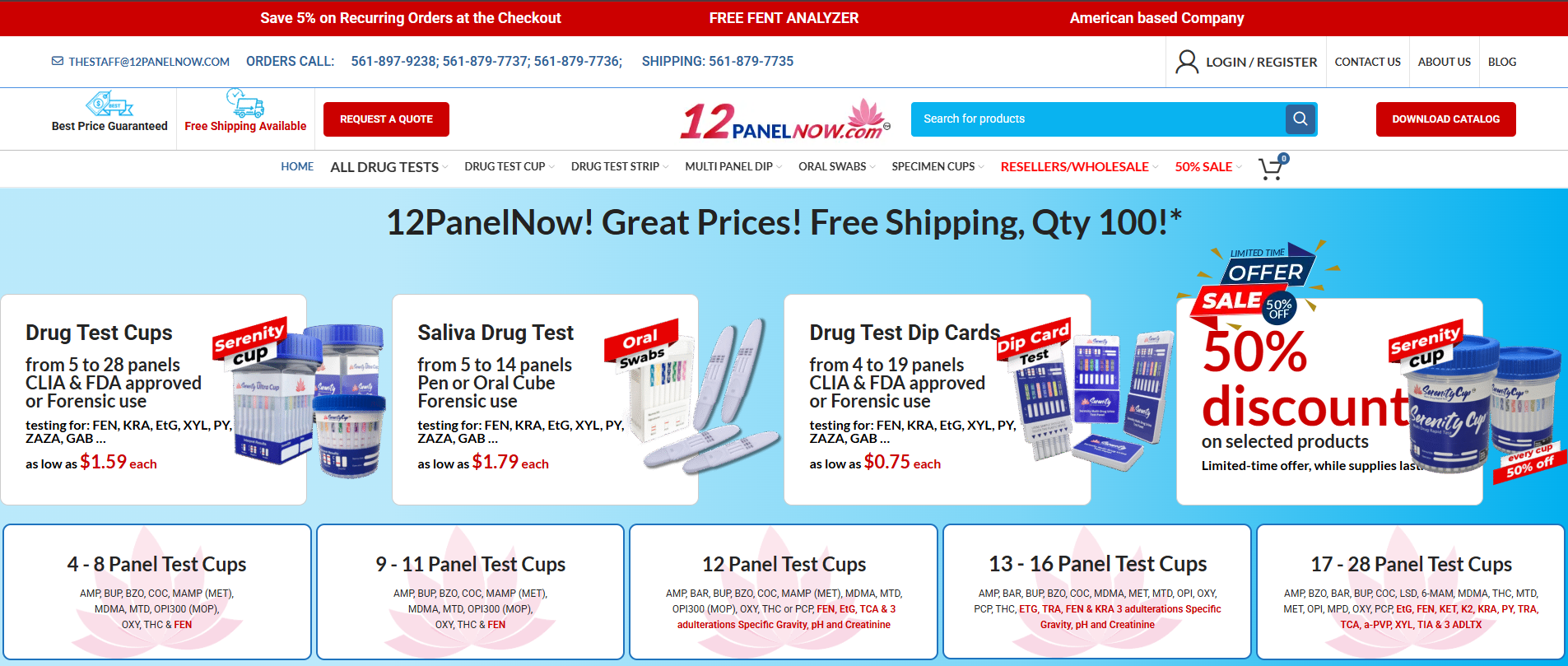
Take control of your drug screening process with precision and confidence. Visit 12 Panel Now to explore our complete selection of drug testing supplies and learn more about best practices for drug testing organizations. Don’t wait until compliance or safety is at risk. Act now and equip your team with tools designed for success.
Frequently Asked Questions
What are drug test panels?
A drug test panel is a standardized screening method used to detect the presence of multiple drugs or drug metabolites in a biological sample, ensuring a comprehensive assessment of substance use.
How many types of drug test panels are there?
Drug test panels are categorized based on the number of substances they can detect, commonly including 4, 5, 10, and 12-panel tests, each designed to screen for specific drug classes.
What substances does a 10-panel drug test detect?
A 10-panel drug test typically screens for marijuana, cocaine, amphetamines, opiates, phencyclidine (PCP), benzodiazepines, barbiturates, methadone, methaqualone, and propoxyphene, offering a broader analysis of drug use compared to a 5-panel test.
What industries commonly use drug test panels?
Drug test panels are widely used in various industries, including transportation, healthcare, construction, manufacturing, education, legal, and rehabilitation programs, tailored to meet the specific needs and regulations of each sector.
Recommended
- How to Choose Multi-Panel Drug Tests: Complete Guide – 12PanelNow | 12 Panel Drug Test | Free Shipping
- 7 Types of Laboratory Drug Screens Every Buyer Should Know – 12PanelNow | 12 Panel Drug Test | Free Shipping
- DOT Drug Panels vs. Non-DOT Panels – 12PanelNow | 12 Panel Drug Test | Free Shipping
- Drug Testing FAQs: Common Questions Answered – 12PanelNow | 12 Panel Drug Test | Free Shipping