



Workplace Wellness vs. Drug Testing: What Works Best?


Employers face a tough choice when addressing substance abuse in the workplace: wellness programs or drug testing policies? Both strategies aim to improve safety, productivity, and employee health, but they take very different approaches. Wellness programs focus on prevention and support, offering tools like counseling, health assessments, and lifestyle coaching. Drug testing policies, on the other hand, detect and deter substance use, often in compliance with federal or industry regulations.
Key Takeaways:
- Wellness Programs: Long-term focus on prevention, but low participation (20–40%) and high setup costs.
- Drug Testing: Immediate results, required in safety-critical industries, but can harm trust and has legal complexities.
- Combined Approach: Many companies integrate both strategies for better results – addressing root causes while ensuring safety and compliance.
Quick Comparison
| Factor | Wellness Programs | Drug Testing Policies |
|---|---|---|
| Goal | Prevention and support | Detection and deterrence |
| Participation | 20–40% (voluntary) | 100% (mandatory) |
| Cost | High, ongoing | Moderate, per-test basis |
| Employee Perception | Positive, supportive | Often negative, seen as punitive |
| Effectiveness | Long-term behavior change | Immediate safety and compliance |
Employers should weigh their industry needs, workforce dynamics, and safety priorities before deciding. Combining both approaches often delivers the best outcomes.
Drug Testing in Organizations: One Policy, Many Realities
What Are Workplace Wellness Programs
Workplace wellness programs are health-focused initiatives sponsored by employers to enhance employee well-being, boost productivity, and lower healthcare costs. These programs also aim to address risks like substance abuse. In the U.S., over 50 million workers participate in such programs, with 51% of employers offering them.
These programs encourage voluntary changes in behavior through education, support, and incentives. Instead of punishing unhealthy habits, they provide resources like counseling, stress management tools, and lifestyle coaching to tackle the root causes of health challenges. The idea is to prevent small issues from becoming major workplace problems.
Healthier employees mean fewer sick days, better morale, and reduced healthcare expenses. By showing genuine care for their workforce, employers can also improve job satisfaction and foster a more positive workplace environment. Let’s explore the key elements that make these programs effective.
Main Components of Wellness Programs
Workplace wellness programs are built around several core components that address different aspects of health:
- Health risk assessments (HRAs): These evaluations, offered by 65% of employers with wellness programs, help identify behaviors and risks related to health and substance use.
- Clinical screenings and biometric testing: Available through 49% of employers, these tests measure factors like blood pressure, cholesterol, and body mass index, uncovering potential health issues early.
- Fitness and physical activity programs: Recognizing the stress-relieving benefits of exercise, 55% of employers provide on-site gyms, fitness classes, or subsidized memberships.
- Mental health and stress management resources: Services like Employee Assistance Programs (EAPs) offer confidential counseling for issues ranging from stress to substance abuse.
- Substance abuse education and prevention: These initiatives include awareness campaigns, educational materials, and support groups to address drug and alcohol risks.
Other offerings include smoking cessation programs (59% of employers), weight management interventions (49%), and disease management programs (56%). Together, these components create a comprehensive approach to fostering employee health.
Advantages of Wellness Programs
Workplace wellness programs bring measurable benefits for both employees and organizations:
- Improved health metrics: Participants often see reductions in body weight, BMI, and waist circumference, leading to better long-term health outcomes.
- Lower absenteeism and higher productivity: Wellness programs can reduce absenteeism by up to 16%, with 56% of employees reporting fewer sick days. This directly impacts workplace efficiency.
- Increased use of preventive care: Health screenings encourage employees to address potential issues early, preventing more serious problems down the line.
- Better recruitment and retention: A strong wellness program signals a company’s commitment to its employees’ well-being, making it easier to attract and retain top talent.
Some companies also report financial savings. For example, Johnson & Johnson saved $250 million in healthcare costs over ten years thanks to its wellness program. However, such results often reflect broader efforts beyond the program itself.
Drawbacks of Wellness Programs
Despite their benefits, workplace wellness programs face several challenges:
- Low participation rates: Only 20-40% of eligible employees take part in these programs annually, leaving many – especially those who might benefit most – unreached.
- High implementation costs: Smaller employers often struggle to afford these programs, citing unclear returns on investment and high administrative expenses.
- Selection bias: Healthier, more motivated employees are more likely to participate, while those at higher risk for health issues or substance abuse often opt out.
- Limited impact of incentives: Financial rewards or penalties, such as a $600 smoking cessation penalty, only modestly increase participation, highlighting the difficulty of driving lasting behavior change.
Additionally, some studies question the overall effectiveness of these programs. A large-scale analysis found minimal impact on key outcomes like medical spending, absenteeism, and productivity after one year. While workplace wellness programs hold promise, their success depends on thoughtful design and addressing these limitations.
What Are Drug Testing Policies
Drug testing policies are formal guidelines designed to identify and prevent substance abuse among employees. These policies play an essential role in creating safer workplaces while ensuring businesses comply with federal and state laws. According to the Society for Human Resource Management (SHRM), 57% of U.S. employers test all job candidates for drugs, and 36% extend testing to current employees.
The purpose of these policies isn’t just to catch substance users – it’s also to discourage misuse before it becomes a workplace issue. Industries like transportation, healthcare, construction, and manufacturing rely heavily on these measures because impaired employees can pose serious safety risks. For instance, the U.S. Department of Transportation (DOT) requires drug and alcohol testing for safety-sensitive transportation roles, covering over 12 million workers across the country.
These policies typically specify when testing is conducted, which substances are screened for, and what happens if someone tests positive. Common scenarios include pre-employment screenings, random testing, post-accident investigations, reasonable suspicion cases, and return-to-duty evaluations. According to the Quest Diagnostics Drug Testing Index, marijuana positivity rates in the general U.S. workforce hit 4.3% in 2022 – the highest in 20 years – highlighting the ongoing need for these policies. With this foundation, let’s take a closer look at the testing methods available.
Drug Testing Methods Available
Employers use various drug testing methods to meet their specific needs. Urine testing is the most commonly used method in U.S. workplaces, valued for its reliability and its ability to detect a wide range of substances within a 1-3 day window.
- Multi-panel drug test cups are a staple in workplace testing. These cups can screen for 5 to 28 substances at once and include built-in temperature checks to ensure sample validity. Companies like 12PanelNow offer CLIA-waived, FDA-approved options with 99% accuracy and results available in minutes. Bulk pricing makes these tests affordable, with prices starting at $1.29 per cup for large orders.
- Saliva-based oral fluid testing has gained traction due to its non-invasive nature and its ability to detect recent drug use within a 48-hour window. This method is particularly useful for on-site testing and reasonable suspicion cases, as it’s tamper-resistant and easy to administer. Saliva test kits from 12PanelNow can screen for 5 to 14 substances and cost as little as $1.99 each when purchased in bulk.
- Single drug test strips are designed for targeted testing of specific substances like fentanyl, alcohol metabolites, or kratom. These strips are a cost-effective option, starting at $0.49 each, and are ideal for focused screening.
- Hair follicle testing provides a long detection window of up to 90 days, though it tends to be more expensive than other methods.
Benefits of Drug Testing Policies
Drug testing policies contribute to workplace safety and offer several other advantages. For starters, they can help reduce absenteeism and turnover rates. Employees who misuse substances are more likely to miss work or leave their jobs, leading to higher recruitment and training costs. By addressing substance abuse, companies can maintain a more stable and reliable workforce.
Improved workplace safety is perhaps the most compelling reason for drug testing, especially in high-risk industries. A 2019 National Safety Council survey revealed that 19% of employers reported injuries or near-misses linked to employee substance use, emphasizing the importance of these programs.
Lower workers’ compensation claims and insurance premiums are another benefit. Insurance providers often offer reduced rates to businesses with robust drug testing policies, as these programs correlate with fewer accidents and injuries. This creates a financial incentive for employers to prioritize safety.
For many industries, regulatory compliance is non-negotiable. DOT-regulated businesses, healthcare facilities, and government contractors are required to maintain strict drug testing protocols or risk losing licenses, contracts, or facing legal penalties.
Lastly, drug testing policies can boost productivity and workplace morale. Employees tend to feel more confident when they know their coworkers are not impaired, especially in team-oriented environments where safety and performance rely on collective effort.
Downsides of Drug Testing Policies
Despite the benefits, drug testing policies come with challenges. Privacy concerns are a significant issue, as many employees view testing as invasive or as a sign of employer mistrust. Poor communication about the purpose and procedures of testing can further damage morale and workplace relationships.
Costs of implementation can also be a burden, particularly for smaller businesses. Testing supplies alone can range from $5-$15 for urine tests to $60-$100 for hair follicle tests. When you add administrative expenses, coordination efforts, and potential legal fees, the financial strain becomes even more apparent – especially for companies with high turnover rates.
False positives, while rare with high-quality tests, can create serious problems. Employers may face legal risks if an employee is wrongly penalized. This risk underscores the importance of using reliable testing products and having confirmatory procedures in place.
Legal complexities have grown as more states legalize recreational marijuana. Employers must navigate conflicting federal and state laws while trying to enforce zero-tolerance policies. Some businesses have shifted toward impairment-based testing rather than simply detecting substance presence.
Another challenge is the limited ability to measure impairment. Most drug tests detect the presence of substances, not whether an employee is currently impaired. For example, someone who used marijuana over the weekend might still test positive on Monday, even if they’re fully functional at work. Critics argue that this disconnect raises questions about the fairness and relevance of certain testing methods.
Finally, discrimination risks can arise, especially if policies disproportionately impact certain groups or penalize medical marijuana users. Employers can mitigate these risks by applying policies consistently and seeking legal guidance, but these remain important considerations for any drug testing program.
sbb-itb-99fc241
Wellness Programs vs Drug Testing: Direct Comparison
Building on our earlier discussion of the merits of each approach, this section dives into how wellness programs and drug testing compare in managing workplace substance abuse risks. Employers choosing between these strategies are essentially deciding between two fundamentally different philosophies. Wellness programs emphasize prevention and support, while drug testing focuses on detection and deterrence. Understanding these differences can help organizations craft effective workplace safety strategies.
Side-by-Side Comparison of Pros and Cons
Looking at wellness programs and drug testing side by side highlights their unique advantages and challenges.
| Factor | Wellness Programs | Drug Testing Policies |
|---|---|---|
| Primary Goal | Prevention, education, and support | Detection and deterrence |
| Employee Participation | 20–40% voluntary participation (up to 73% with penalties) | 100% participation when mandatory |
| Cost Structure | Variable; ongoing investments in programs and incentives | Moderate; $0.49–$15.00 per test, depending on method |
| Employee Perception | Generally positive; seen as supportive | Often negative; can reduce workplace trust |
| Implementation Speed | Slow; requires a gradual culture change | Fast; provides an immediate deterrent effect |
| Long-term Effectiveness | Potential for sustained behavior change | Limited impact on addressing root causes |
| Legal Requirements | Voluntary with ADA/HIPAA compliance | Often mandatory in regulated industries |
| ROI Timeline | 2–5 years for measurable results | Immediate compliance and safety benefits |
Participation in wellness programs tends to be voluntary, with rates ranging from 20–40%, though incentives can boost these numbers. On the other hand, mandatory drug testing ensures full participation but may come at the cost of reduced workplace trust due to its punitive nature.
Which Method Works Better
The effectiveness of either approach depends on factors like industry requirements, workplace culture, and organizational goals. There’s no universal answer – each method has its place based on context.
Drug testing is particularly valuable in industries where safety is a top priority. Transportation companies, healthcare facilities, and construction sites rely on drug testing to mitigate immediate risks and meet regulatory standards. Its speed and reliability make it an essential tool in these high-stakes environments.
Wellness programs, however, excel in workplaces aiming for long-term cultural shifts rather than immediate compliance. These programs are most effective when paired with robust support systems that address the deeper causes of substance abuse. For instance, Johnson & Johnson reported $250 million in healthcare savings over a decade thanks to their wellness initiatives. However, the widely cited claim of “$3 saved for every $1 spent” has been challenged by newer studies, which suggest a much smaller or even negligible short-term return on investment.
Drug testing offers more predictable costs and immediate results. For example, multi-panel tests from 12PanelNow start at $1.29 per test, enabling employers to budget accurately while benefiting from immediate compliance and risk reduction. The lower upfront investment and quick results make it an appealing option for many organizations.
Employee satisfaction data shows a preference for supportive measures like wellness programs. Employees in companies with such programs often feel that management values their health and safety. However, this effect can fade over time. In contrast, while drug testing is effective for compliance, its punitive nature can harm workplace morale and trust.
Recent studies shed more light on wellness programs. For example, randomized controlled trials found only modest short-term benefits, such as increased health screenings and a better perception of management’s commitment to health. Notably, these programs showed no significant reductions in medical spending or absenteeism after one year. This suggests that wellness programs may take longer to yield measurable results than initially expected.
In industries with strict regulatory demands, drug testing is often non-negotiable. Over 56% of U.S. employers use some form of drug testing, with the highest rates in safety-sensitive sectors. Maintaining licenses and contracts frequently requires robust testing protocols.
Ultimately, while each approach has strengths, combining them can create a more balanced strategy. Many organizations now integrate wellness programs with drug testing to address both immediate risks and long-term workplace health and safety goals. This dual approach allows companies to enhance their safety measures while fostering a supportive culture.
Combining Wellness Programs with Drug Testing
Many organizations are finding that combining wellness programs with drug testing creates a well-rounded approach to addressing substance abuse risks. This dual strategy tackles the issue from two angles: wellness programs help identify and address underlying problems early, while drug testing ensures workplace safety and compliance with regulations.
Why Use Both Methods Together
When wellness programs and drug testing are used together, organizations often see better participation and improved health outcomes compared to using just one method. For example, companies with comprehensive wellness programs report participation rates of 59%, significantly higher than those offering limited options. Pairing these programs with drug testing allows employers to better target their resources, focusing on employees who might need support the most.
This combination also shifts the perception of drug testing. Instead of being seen as strictly punitive, testing becomes part of a larger health and wellness effort. This can improve workplace morale and build trust, making employees feel supported rather than singled out. By balancing immediate safety needs with long-term health goals, organizations can foster a safer, more supportive, and drug-free work environment.
How 12PanelNow Can Help
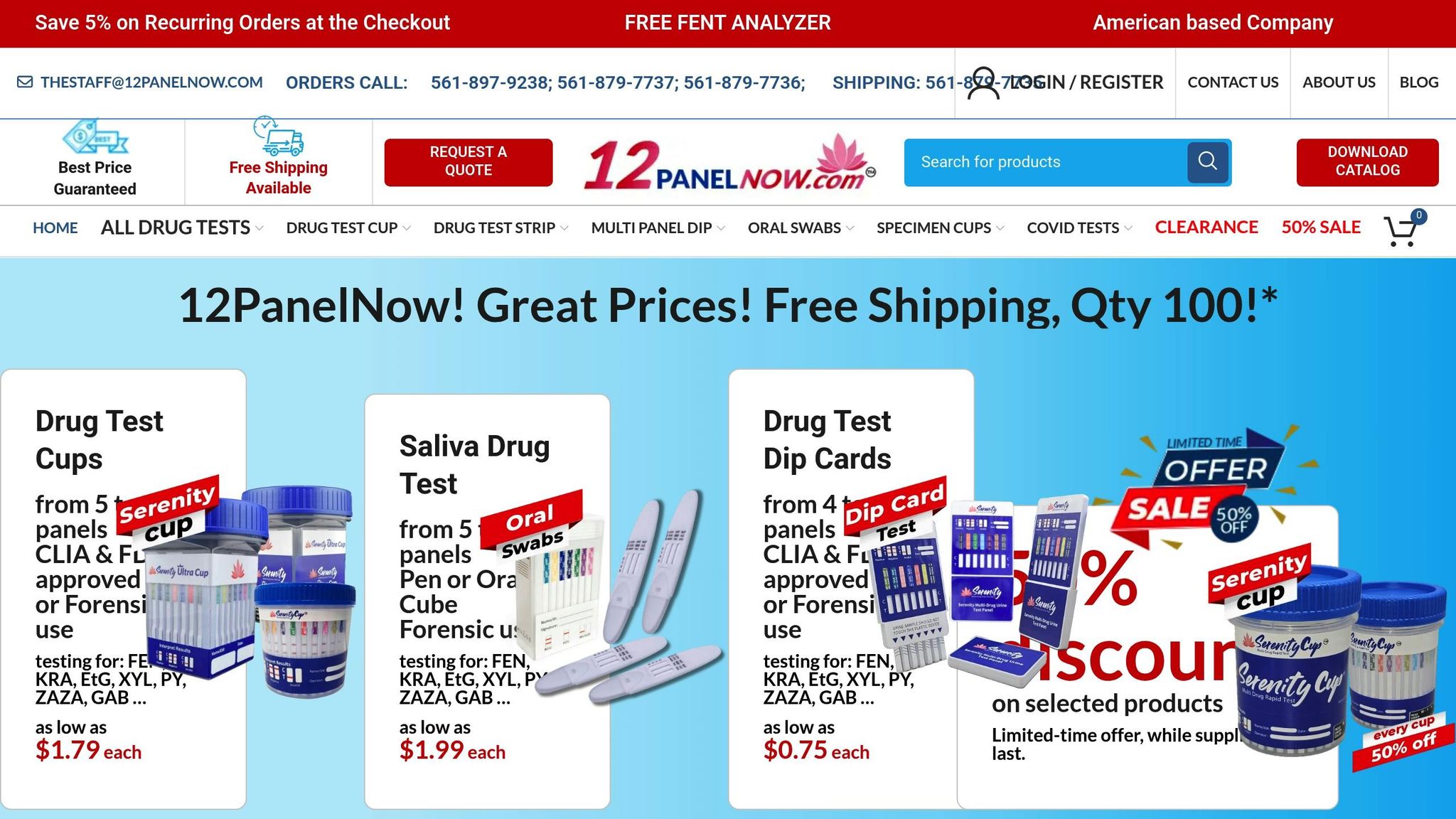
Implementing an integrated strategy requires reliable drug testing supplies that align with wellness initiatives, and that’s where 12PanelNow comes in. Their products make the testing process straightforward, allowing organizations to focus on their wellness efforts.
- Multi-panel drug test cups: These cups, priced between $1.29 and $4.29, can detect 5 to 28 substances. They include built-in temperature strips and leak-resistant designs, ensuring accuracy and compliance. With a 99% accuracy rate, false positives are rare, helping to maintain employee trust in the program. These CLIA-waived and FDA-approved tests also meet regulatory standards.
- Oral swabs: For a less invasive option, 12PanelNow offers oral swabs priced at $1.99 to $2.49. These tests are ideal for organizations aiming to maintain a supportive atmosphere, as they align well with the culture of wellness initiatives.
- Single drug test strips: For targeted testing based on wellness program data or specific risks, single drug test strips are available at $0.29 to $0.69. These strips are especially useful for organizations needing flexible testing solutions.
Additionally, 12PanelNow offers bulk purchasing options and same-day shipping, helping organizations manage costs and maintain consistent testing schedules. For industries like transportation, healthcare, and construction, their forensic-use products ensure strict compliance while still supporting employee well-being.
Conclusion
Neither wellness programs nor drug testing policies alone can fully eliminate the risks of substance abuse in the workplace. While over 50 million U.S. workers participate in wellness programs, drug testing serves as a strong deterrent but often fails to address the deeper causes of substance misuse.
A combined approach – focusing on both prevention and detection – offers a more effective solution. For instance, Johnson & Johnson implemented an integrated strategy that saved $250 million in healthcare costs over a decade. This example highlights how pairing wellness programs with clear substance use policies can lead to substantial benefits.
However, one-size-fits-all strategies don’t work. The needs of a transportation company differ significantly from those of a healthcare facility or construction site. Each organization must evaluate its unique risks, workforce characteristics, and company culture to design solutions that meet its specific requirements.
Employers should prioritize both prevention and detection. Wellness programs promote long-term employee engagement and tackle underlying health concerns, while drug testing ensures immediate safety and compliance with regulations. Companies that adopt this dual strategy often see higher participation rates, improved safety records, and stronger employee trust. Beyond meeting regulatory standards, this approach helps build a workplace culture centered on health and well-being.
Ultimately, integrating supportive wellness programs with accurate, FDA-approved testing supplies creates safer and healthier work environments. By leveraging reliable resources like those from 12PanelNow (https://12panelnow.com) and evidence-based wellness initiatives, organizations can better protect their employees while fostering a culture of trust and safety.
FAQs
What’s the best way for employers to combine wellness programs and drug testing to manage workplace substance abuse?
Employers can address substance abuse in the workplace by integrating wellness programs with drug testing policies. Wellness programs create a supportive and healthy environment, offering employees access to resources and assistance. Meanwhile, drug testing helps identify potential issues early, contributing to a safer and more productive workplace.
12PanelNow offers dependable drug testing supplies like multi-panel test cups, dip cards, and oral swabs, all designed for precision and ease of use. When combined with robust wellness initiatives, these tools enable employers to strike a balance between ensuring workplace safety and supporting employee well-being.
What long-term advantages can employers and employees gain from combining wellness programs with drug testing policies?
Integrating wellness programs with drug testing policies can create a win-win situation for both employers and employees. For businesses, it helps ensure a safer and more efficient workplace while promoting a sense of responsibility across the team. On the flip side, employees gain access to resources that support healthier living, along with the reassurance of a safer work environment.
This combination doesn’t just lower the risks associated with substance abuse – it also enhances team morale and encourages loyalty by demonstrating a genuine commitment to employee health and safety. To make drug testing effective, it’s crucial to use dependable, high-quality supplies for accurate and smooth results.
How do legal and privacy concerns affect drug testing policies in the workplace?
Legal and privacy considerations are essential when designing workplace drug testing policies. Employers must carefully follow both federal and state laws, which can differ significantly, to remain compliant while also safeguarding employee rights. This includes respecting privacy laws and ensuring testing procedures are applied fairly and consistently.
To simplify the process and maintain accuracy, many organizations rely on trusted drug testing supplies. Companies like 12PanelNow offer a wide range of reliable options, such as multi-panel drug test cups, oral swabs, and dip cards. These products are crafted for accuracy and ease of use, serving industries like healthcare, rehabilitation centers, and workplaces throughout the U.S.